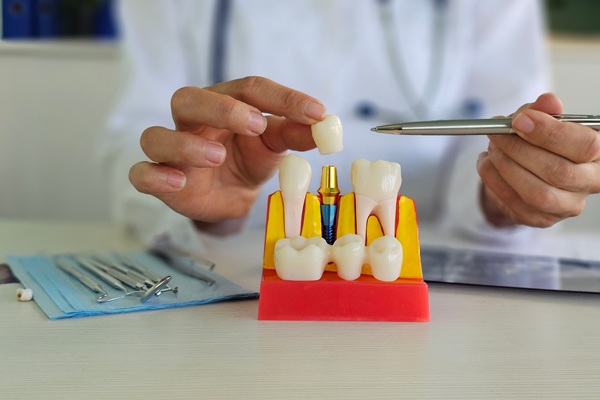
Do you need a dental crown? Dental crowns serve as protective covers for damaged or weakened teeth, restoring their strength and natural shape. There are a variety of materials available to meet your unique needs and help you smile with confidence again.
Porcelain-fused-to-metal (PFM) crowns
Porcelain-fused-to-metal (PFM) crowns have been used in dentistry for years. They combine a tooth-colored exterior with a metal base, balancing appearance with durable reinforcement. PFMs can show a faint gray line near the gum if tissue thins or recedes. In some cases, the porcelain may also chip over time, revealing the metal underneath. Fortunately, PFM crowns last almost as long as metal crowns and restore both front and back teeth.
All-metal crowns
All-metal crowns offer additional durability for the back teeth, which handle the majority of the chewing and bite forces. They adapt to the edges of the teeth and distribute forces evenly, prolonging their durability. They rarely chip or break and can handle years of wear without breaking down. Patients find that the metal feels gentle on the surrounding tooth enamel, reducing scuffing compared to harder dental crown materials. However, they do not mimic natural enamel. This design is why dentists typically place metal crowns in less visible areas, such as the back teeth.
All-ceramic or porcelain dental crowns
All-ceramic or porcelain dental crowns mimic the appearance of natural enamel more than other crown materials. They are also an ideal option for patients with metal allergies. Unfortunately, they are not as durable as metal or PFM crowns, making them more ideal for more visible teeth rather than for back molars, which require greater durability for chewing and breaking down food. These crowns are also not ideal for patients who clench or grind their teeth, as they are more prone to chipping.
Zirconia crowns
Zirconia provides a durable framework for a dental crown while providing the cosmetic benefits of porcelain. It is strong like metal crowns but is tooth-colored. It is also less likely to experience the wear and tear that naturally occurs in the crown over time, such as sharp edges on its surface. That said, zirconia crowns can sometimes cause additional wear on the surrounding tooth due to the hard material.
E-max (lithium disilicate) crowns
E-max dental crowns build on the cosmetic benefits of porcelain crowns with the strength and reliable bonding of metal crowns. It preserves more enamel because it can function at thinner dimensions. E-max matches the shade and brightness of the patient's natural teeth, which helps with transitions from the front teeth to the premolars. However, it does not match zirconia's design on the further back teeth and molars, particularly for patients who grind and clench their teeth.
Choose the right material for you
Do you have further questions about dental crown materials? The Twin Palms Dental team is here to find the right crown to fit your functional needs and cosmetic goals. For more information or to schedule a consultation, call our Sylmar office today.
Request an appointment here: https://www.twinpalmsdental.com or call Twin Palms Dental at (818) 573-2192 for an appointment in our Sylmar office.
Check out what others are saying about our dental services on Yelp: Dental Crowns and Dental Bridges in Sylmar, CA.
Recent Posts
A dental crown usually lasts for many years. But it can become loose or fall out before it is supposed to be replaced. If your dental crown becomes dislodged or falls out, it is crucial to know how to handle the situation. Read on to find out what to do if your crown falls out.A…
A dental bridge might be the right treatment if you have lost one or more teeth and want to enhance your oral health and self-esteem. The dental bridge can restore your smile’s appearance and allow you to chew normally once more. If you are considering this treatment, this article outlines all the steps involved so…
A dental bridges is a method of teeth replacement that involves the attachment of a dental crown (or multiple dental crowns that form a bridge) and abutment teeth. An implant-supported bridge may also be an option, which is a bridge supported by implants rather than natural teeth. Regardless, keeping the dental bridge clean is essential. Patients…
A loose dental bridge can occur for many reasons, including excessive wear and tear, damage to the abutment teeth and periodontal concerns. The sooner that you can detect a loose or damaged dental bridge, the better chance you have to make an inexpensive repair and save the dental bridge from becoming lost. A dental bridge may…